

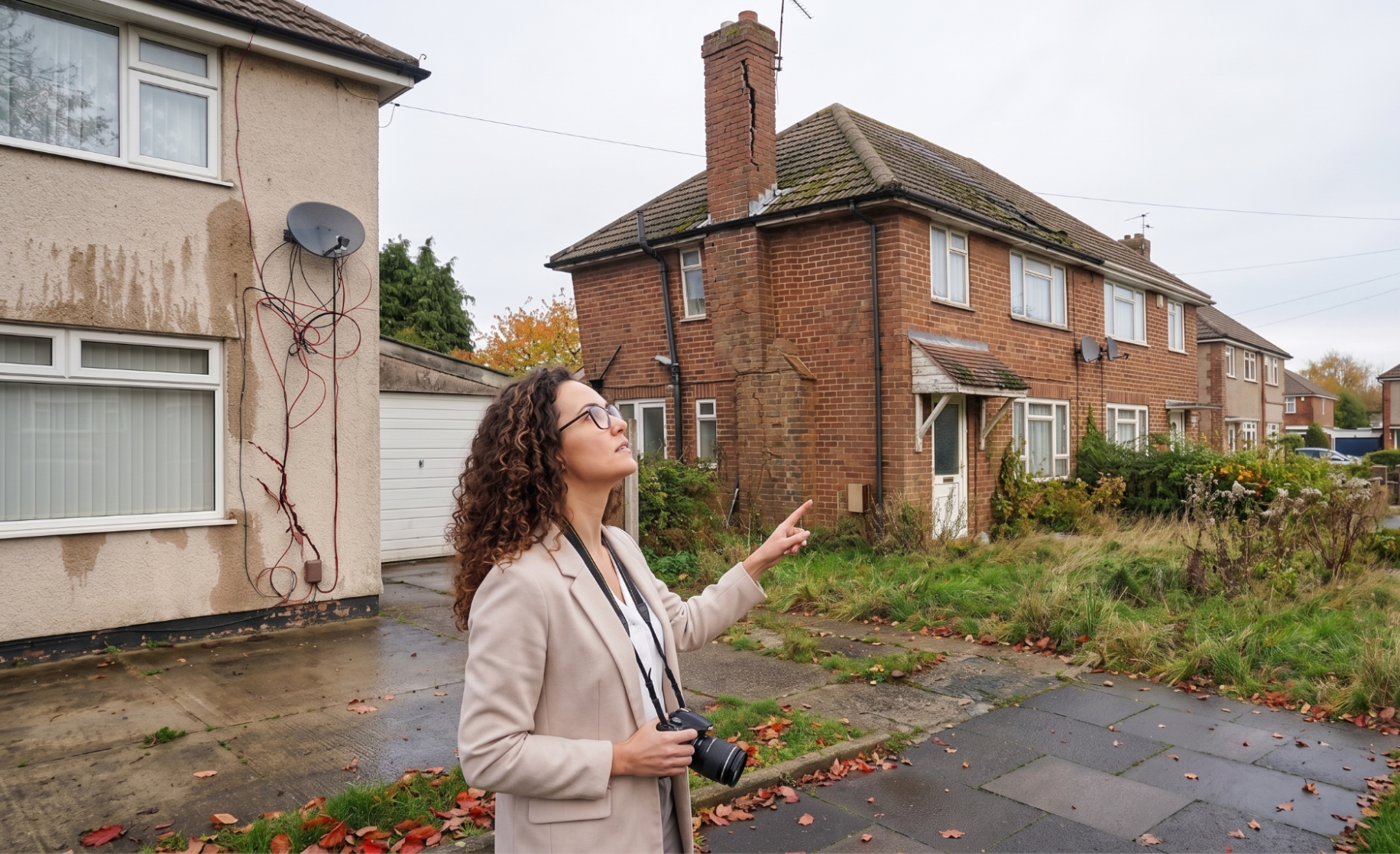
Securing a home insurance policy requires passing a rigorous property assessment that mimics a thorough building inspection. Insurers look for potential risks, like the condition of your roof, the land it is on, and the building materials used.
According to the Association of British Insurers, insurers paid out a record £6.1 billion in property claims in 2025. When payouts are high, insurance underwriters have a strong reason to examine every new application very closely.
Spot property risks before applying to get better rates and ensure continuous coverage. If you don’t fix these issues, you might face higher premiums, limited coverage, or even have your application denied. This guide highlights seven crucial warning signs.
At Cadis Homes, we help you discover tailored home insurance solutions by providing competitive rates and comprehensive policies for homeowners across the UK.
Top Red Flags Insurers Check First
Here are the top seven red flags insurers check first before approving a home policy:
Signs of Subsidence and Ground Movement
Cracks bigger than a ten pence coin, doors that jam, and leaning floors are common signs of the ground shifting. Insurance companies are wary of these problems because fixing them can be costly. However, if a structural engineer’s report shows that the real movement is old and no longer happening, it makes a big difference.
Asbestos Hidden in Older Properties
If a house is built or updated before the year 2000, it might have asbestos. You can find it in things such as Artex ceilings, garage roofs, floor tiles, and insulation around pipes. A 2026 HSE report found that about 5,000 people pass away each year from illnesses caused by asbestos. This is why insurance companies inquire about it when providing coverage for older homes.
Getting a professional inspection and having the asbestos removed by certified experts provides official proof that the risk has been addressed properly. For detailed guidance on identifying suspected materials and arranging accredited inspection or clearance, resources can be found at https://advanceasbestosremoval.co.uk/. They offer practical advice and removal services on handling the process safely.
A Roof in Poor Repair
Loose shingles, a drooping roof peak, tile discolouration and clogged gutters with moss growth all signal to an insurer that water damage is likely. Insurance companies often ask how old the roof is and how much of it is flat. Having a recent inspection report or even a bill for roof replacement can make your answers much more convincing.
For a visual representation, check this guide that demonstrates how you can check your roof for any defects.
Old Wiring and Outdated Electrics
If your fuse box still has fuses you can replace, or if your cables are covered in fabric, or if your sockets get warm, your wiring might be old and need attention. Electrical issues are a major cause of house fires. Getting an Electrical Installation Condition Report from a qualified electrician can give your insurance company peace of mind for a small cost.
Flood History and High Risk Postcodes
UK Homeowners are required to disclose if their home has flooded before. Insurers will check flood risk for your area anyway. Surveyors can identify signs of past flooding, such as water stains on the bottoms of walls or a damp smell in downstairs rooms. If your home is in an area with a high flood risk, you can still get affordable insurance through the Flood Re scheme. Being upfront about past flooding ensures your policy remains valid if you need to access this support.
Unusual Building Methods and Materials
If your home has a thatched roof, timber frame, extensions or is made of prefabricated concrete, it’s not built using typical methods. This doesn’t mean your insurance will be automatically denied, but you’ll likely need a specialised policy. It’s really important to be honest about how your home was built. If you don’t report it, your insurance may not cover your claim later.
Empty Homes and Past Claims
Insurers tend to be concerned about properties left empty for over 30 days and about a history of frequent claims. To help ease their minds, try to make sure the home looks like someone is living there, take care of minor repairs yourself if it makes sense, and be completely honest about any claims you’ve made in the past.
Conclusion
Insurers frequently reward homeowners who proactively manage property risks before they cause actual damage. Evaluating your property honestly, obtaining professional reports if necessary, and declaring all details accurately will put you in the best position.
Taking care of these seven warning signs now will help you get approved more easily later. Are you looking for coverage that’s just right for your home? Contact us at Cadis Homes today to compare tailored policies and competitive rates.